
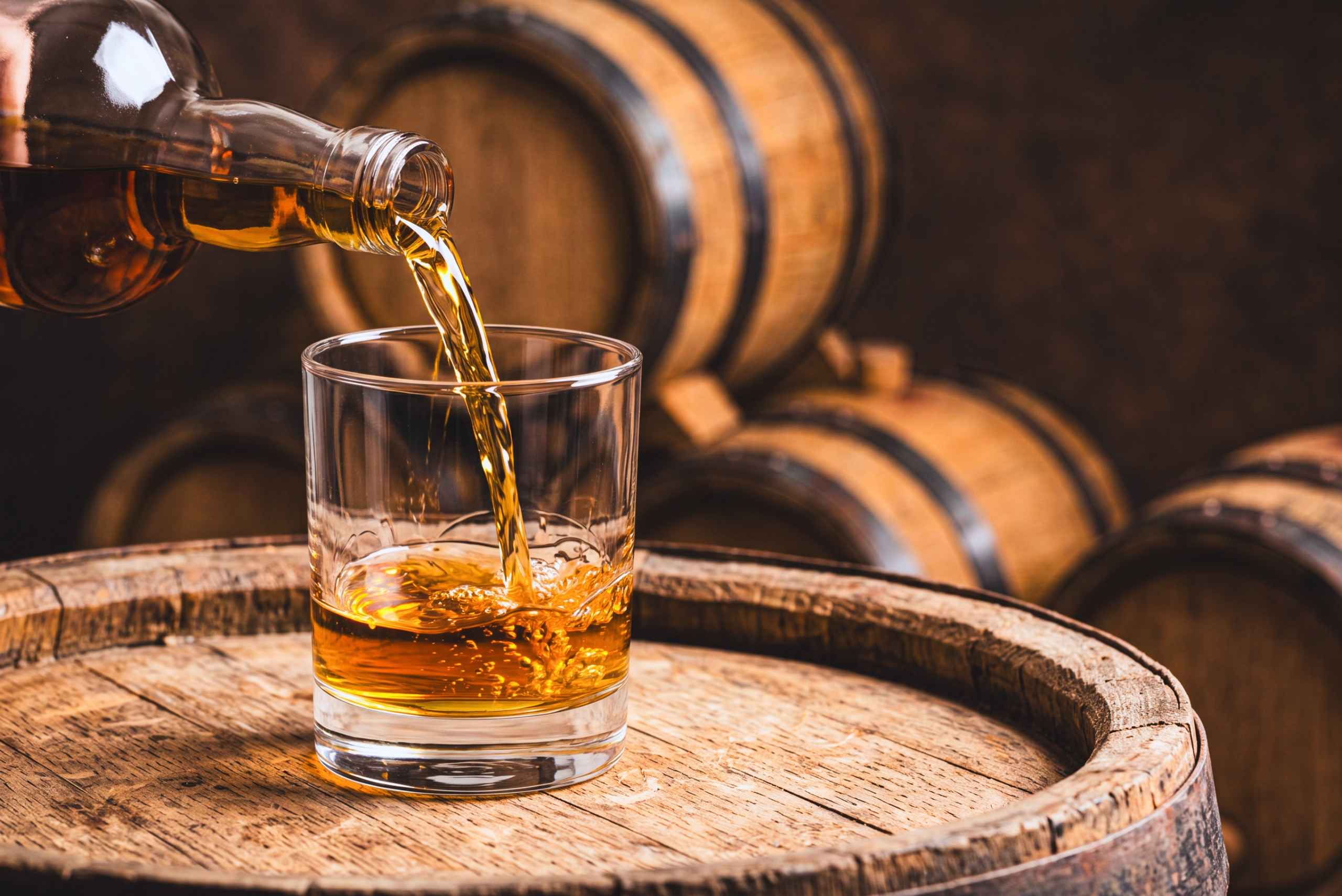
Guide to the Whisky Maturation
While distillation creates the spirit, it is the years spent in the cask that forge its soul. Scientists at the Scotch Whisky Research Institute estimate that 60% to 70% of the character in a freshly opened bottle comes from the spirit’s contact with wood [1], which makes the whisky maturation process is not the still, but the main driver of flavour. That flavour is never created in isolation. It is shaped by the wood, by time, and by the whisky maturation environment of the warehouse where the cask will sit for a decade or more. For cask owners, understanding the factors affecting whisky maturation is essential to judging both the quality and the future value of a portfolio. This guide covers what happens inside the cask, why the warehouse matters as much as the wood, and which variables move the needle most.
The Whisky Maturation Process
Maturation is not storage. Three processes run at the same time inside every cask: the wood adds compounds to the spirit, the wood removes compounds from it, and the spirit reacts with the air that seeps through the staves. Colour, texture and aroma are all products of how far each of the three has progressed.
Additive: what the oak gives
Ethanol and water break down the lignin and hemicellulose in the oak, releasing vanillin, oak lactones, tannins and wood sugars into the spirit. Vanillin reads as vanilla and toffee. Oak lactones give coconut and fresh sawn wood. Tannins supply the grip and dryness that stop an old whisky tasting flabby. Charring the inside of the cask caramelises those wood sugars first, which is why a heavily charred cask darkens a spirit far faster than a lightly toasted one.
Substractive: what the casks takes away
The charred layer behaves like activated carbon. It strips sulphur compounds: struck match, cooked vegetable along with the harsh, cereal-heavy notes of new-make spirit. This is the least visible half of maturation and the reason a new make that tastes aggressive at three months can taste clean at eight years without a single new flavour being added.
Interactive: oxidation and esterification
Oak is porous, so oxygen enters continuously. Oxidation converts alcohols into aldehydes and acids, and those acids then combine with alcohols to form esters, the compounds behind orchard fruit and tropical fruit notes in long-aged whisky. The same exchange lets vapour escape, which is why every cask loses volume as it gains complexity.
The legal clock
Under Regulation 3 of the Scotch Whisky Regulations 2009, Scotch must be matured only in oak casks of a capacity not exceeding 700 litres, for a period of not less than three years, in Scotland, in an excise warehouse or a permitted place. Bottling strength must be at least 40% ABV [2]. An age statement always refers to the youngest whisky in the bottle, and maturation stops the moment the spirit is bottled which whisky does not develop in glass [3].
Why the Whisky Maturation Environment Matters
Two casks of identical wood, filled on the same day from the same distillation run, will not be the same whisky in ten years if they are stored in different warehouses. The building, and even the position inside it, sets the pace of everything described above.
Temperature drives the exchange
As the warehouse warms, the spirit expands into the staves; as it cools, it draws back out carrying extracted compounds with it. Scotland’s moderate seasonal swings produce a slow, gradual extraction measured in decades, which is why Scotch age statements run far longer than those of whiskies matured in subtropical climates, where the same extraction happens in a few years.
Humidity decides what you lose
Humidity determines which liquid leaves the cask first. In dry conditions water evaporates faster than alcohol and strength climbs. In the cool, damp warehouses typical of Scotland, alcohol escapes faster than water and strength falls year after year. That decline carries a hard commercial limit: a cask that drifts below 40% ABV can no longer be bottled as Scotch Whisky [2] [4], so strength is monitored as closely as flavour in the later decades.
Warehouse type and micro-climate
Traditional dunnage warehouses have thick stone walls, earth floors and casks stacked three high, producing cool, damp and very stable conditions. Racked warehouses stack casks up to twelve high in steel frames, creating a real temperature gradient between the top and bottom rows. Palletised warehouses store casks upright and are the most space-efficient of the three. Position within any of them creates micro-climates, and two casks in the same building can mature at measurably different rates.
The angel’s share
The Scotch Whisky Association puts evaporation at roughly 2% of a cask’s contents each year [4], and young spirit typically loses more than that in its first few years. Applied to a 250-litre hogshead, 2% a year leaves around 167 litres after twenty years. That loss is not a defect. It is the cost of concentration, and it is why older casks yield fewer bottles.
Key Factors Affecting Whisky Maturation
Beyond the building, four cask-side variables account for most of the difference between one cask and the next. Cask type is the shorthand the trade uses for several of them at once.
| Cask type | Approx. capacity | Typical previous fill | Effect on maturation |
|---|---|---|---|
| Quarter cask | 50 litres | Bourbon or sherry | Fastest extraction; mostly used for finishing |
| American Standard Barrel | 200 litres | Bourbon | Vanilla and coconut; the industry workhorse |
| Hogshead | 225–250 litres | Rebuilt from bourbon barrels | Slower, more balanced development |
| Butt | 475–500 litres | Sherry | Slow; deep colour and dried fruit |
| Puncheon | 500–700 litres | Sherry or rum | Slowest extraction per litre of spirit |
Cask size
Extraction depends on how much wood each litre of spirit touches. A 50-litre quarter cask has roughly twice the wood contact per litre of a 200-litre barrel, so it delivers oak influence in months rather than years. Larger formats such as butts and puncheons work in the opposite direction, protecting distillery character over long maturations.
Oak species
American white oak, Quercus alba, is high in oak lactones and delivers vanilla, coconut and soft sweetness. European oak, Quercus robur, carries more tannin and produces spice, dried fruit and darker colour in less time. Japanese Mizunara is more porous and prone to leaking, matures slowly, and contributes sandalwood and incense notes that command a premium precisely because so few usable casks exist.
Previous fill and what is allowed
A first-fill cask that one holding Scotch for the first time since its previous contents, gives up far more colour and flavour than a second or third fill, which increasingly lets the distillery’s own character lead. What the cask held before is also regulated. Scotch may be matured in new oak, or in oak previously used for still or fortified wine, beer or ale, or spirits. The Scotch Whisky Association’s guidance excludes anything produced from stone fruits, beer or ale with fruit, flavouring or sweetening added after fermentation, and spirits with those additions after distillation [5]. A cask with the wrong history cannot legally be used, which makes provenance a compliance question, not only a flavour preference.
Fill strength and time
Most Scottish malt distilleries fill their casks at around 63.5% ABV, an industry convention rather than a legal requirement, as the regulations set no filling strength [6]. The level matters because compounds such as oak lactones extract more readily at higher alcohol strengths, and because a higher starting point buys headroom against the slow decline towards the 40% floor. Time is subject to the same principle of diminishing returns. Once tannin and wood extract overwhelm the spirit, a cask is over-oaked, and no further ageing reverses it. Older is not automatically better, and it is not automatically more valuable.
How Cask Trade Enhances Your Liquid Assets
Time is the ultimate craftsman, but expert management ensures its success. The whisky maturation process rewards owners who treat a cask as something to be monitored rather than left alone. Whisky maturation flavour keeps developing for as long as the spirit stays in the warehouse, and so does value, driven by the whisky maturation environment and the other factors affecting set out above. Whether you are starting a portfolio or diversifying existing holdings, our specialists can walk you through the detail cask by cask.
References:
- Whisky & Wisdom – The complete guide to oak, casks, & whisky maturation
- GOV.UK – The Scotch Whisky Regulations 2009
- Scotch Whisky Association – Scotch Whisky FAQs
- Scotch Whisky Association – Personal Investment in a Scotch Whisky Cask
- Scotch Whisky Association – Guidance on Allowable Maturation Casks
- Whisky Magazine – How does cask filling strength affect whisky maturation?


