
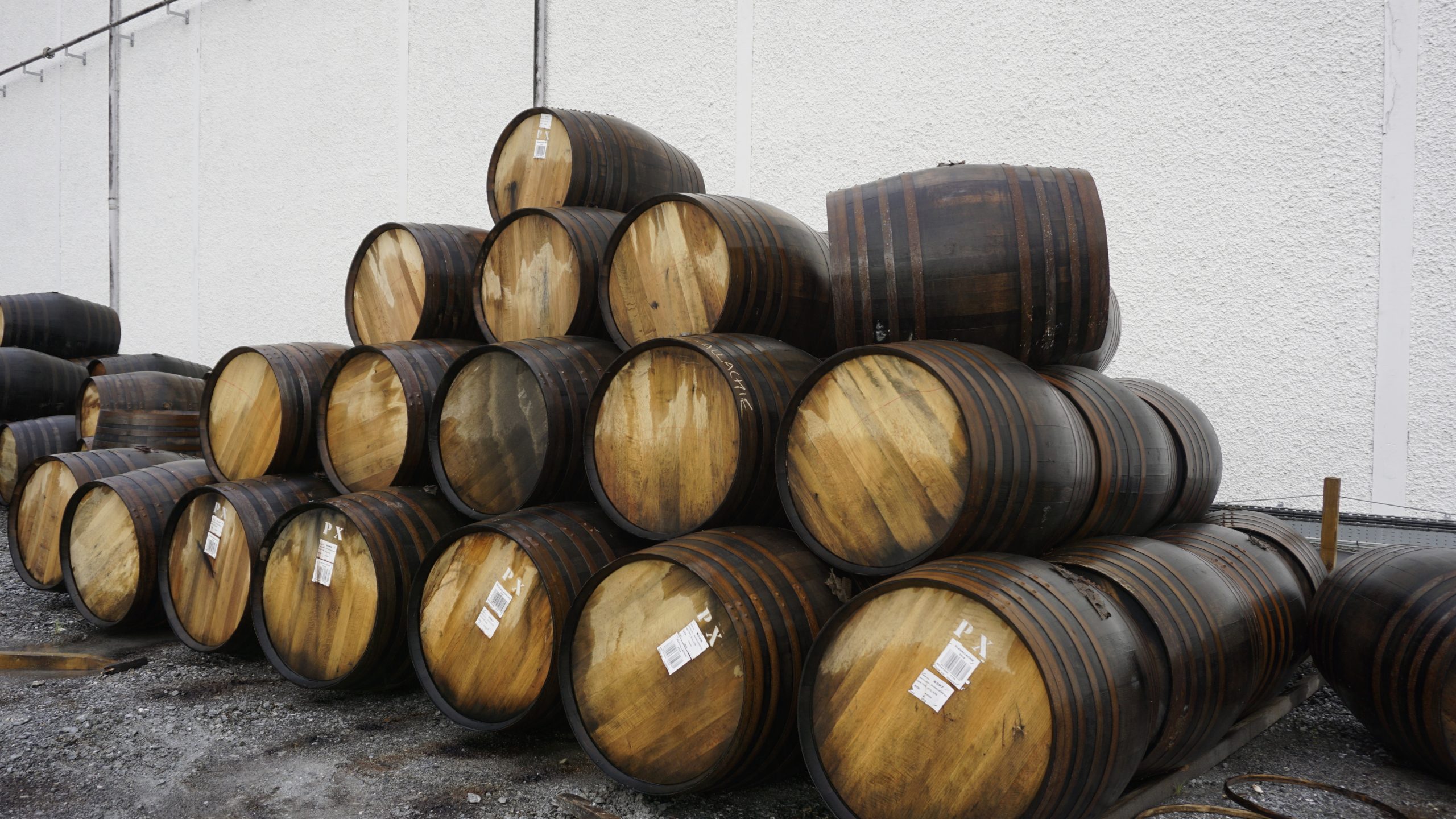
In the world of premium spirits, time is the ultimate craftsman. But as whisky matures in its oak housing, a mysterious portion of the liquid vanishes into thin air. This natural phenomenon, known as the “Whisky Angel’s Share”, is an important consideration for cask owners because it gradually reduces the volume of spirit remaining in the barrel. Understanding whisky evaporation is important for investors, since the volume of spirit remaining over time can affect potential bottling yield and the economics of holding a cask. This guide breaks down the meaning of angels share in whisky, its evaporation rate per year and the science driving it, helping new cask owners build realistic expectations around maturation, bottling yield and long-term cask ownership.
The term Angel’s Share dates back centuries, when distillers noticed that whisky mysteriously disappeared from sealed casks while resting in the warehouse. Unable to explain the loss scientifically at the time, they attributed it to angels quietly taking their share from above. In modern days, Angel’s Share refers to the portion of whisky that naturally evaporates from an oak cask during maturation.
What Causes Whisky to Evaporate?
These days, distillers understand that the Angel’s Share is due to natural evaporation that occurs while the whisky is maturing in the casks. As oak is not completely airtight, both water and alcohol can be lost during the maturation process, and the balance between them can affect the spirit’s Alcohol by Volume (ABV).
Climate has a significant influence on whisky maturation. In warmer, drier climates, like Kentucky or Texas, more water than alcohol can evaporate from the cask, increasing the spirit’s alcoholic strength or Alcohol by Volume (ABV). By contrast, Scotland’s cool, moist climate favours proportionately greater alcohol evaporation, which tends to reduce the spirit’s alcoholic strength. Other factors include:
- Temperature: Heat expands the liquid and increases internal pressure, pushing more vapor out through the oak’s microscopic pores to accelerate evaporation.
- Humidity: High humidity traps water in the cask, causing alcohol to evaporate faster (lowering ABV), whereas dry air allows water to escape faster (raising ABV).
- Cask Condition: The natural porosity of the oak grain, the tightness of the wooden staves, and the integrity of the seal directly dictate how much vapor escapes.
- Warehouse Environment: Airflow and microclimates, such as higher heat on top racks versus cooler floors, create varying evaporation rates within the exact same building.
The overall maturation period magnifies these effects, as small annual losses accumulate over many years to substantially reduce the final volume and concentrate the flavours of the aged whisky.
What is the Whisky Evaporation Rate Per Year?
For a distilled liquid to be considered whisky, the percentage of alcohol needs to be at least 40%. [1] As both alcohol and water can evaporate, and the relative loss of each determines whether the ABV rises or falls.
There is no single universal figure for whisky evaporation per year. We estimate that liquid volume can decrease by approximately 2-3% annually through evaporation, although, as previously mentioned, the actual rate varies with temperature and other storage conditions. The practical impact becomes more significant over a long holding period.
For example, if a cask contains 200 litres, assuming a hypothetical 2% annual compound loss were maintained, approximately 196 litres would remain after one year and around 163 litres after 10 years. This is an illustration only; actual liquid losses can vary considerably.
The Angel’s Share in whisky evaporation cannot simply be eliminated without changing the maturation process. However, strategic and professional management can help protect your assets.
1. Monitor the Cask Environment
Optimum storage arrangement should provide appropriate warehouse conditions and proper management. Records should also track the cask’s identity, distillery, spirit type, fill date, cask type and storage location. These details become particularly important when a cask is eventually transferred, sold or prepared for bottling. You should only trust your casks to a reputable agent.
2. Track Volume and Alcohol Strength
The Angel’s Share of whisky evaporation per year becomes commercially significant when projected bottling quantities are calculated. A cask that loses liquid over several years may produce fewer bottles than its original fill volume suggests. Owners should therefore avoid treating an advertised future yield as guaranteed. Actual losses depend on the individual cask and maturation conditions.
3. Protect Provenance
Good documentation can be as important as physical storage. Clear ownership records, warehouse documentation and an auditable cask history help establish what the asset represents and make its history easier to verify before a future sale.
How Cask Trade Protects Your Maturing Assets
For investors, the whisky evaporation per year is only one part of the risk calculation. Storage, insurance, transaction costs, market demand, provenance and exit liquidity can all affect the eventual outcome. Cask Trade understands that whisky investment carries risks and that evaporation should be factored into projected returns. With that in mind, our professional management service can help owners maintain records, arrange sampling or regauging (a later assessment of the volume and alcohol strength remaining in a cask) and understand how changes in volume and ABV affect the holding. Cask records may also distinguish between Original Litres of Alcohol (OLA) and Regauged Litres of Alcohol (RLA), helping owners track how the spirit’s volume changes during maturation to improve visibility over the asset.
For Hong Kong investors, it is also worth distinguishing between owning a physical whisky cask and investing in a financial product that references whisky. The legal structure, ownership documentation, fees, tax treatment and exit arrangements should be checked independently before committing capital.
Turn Whisky Maturation into Smart Investment|Cask Trade
Whisky evaporation per year is an inevitable part of the aging process, therefore professional oversight of your whisky investment is what separates a hobby from a high-yield asset. Let the experts at Cask Trade manage your portfolio with precision, ensuring your asset matures toward its maximum potential, meaning that the “Angel’s Share” will not evaporate your investment!
Reference:
GOV.UK – Producing Scotch Whisky


